
What a luxury hotel website needs to make clear
30 October 2026
The photograph opens the conversation
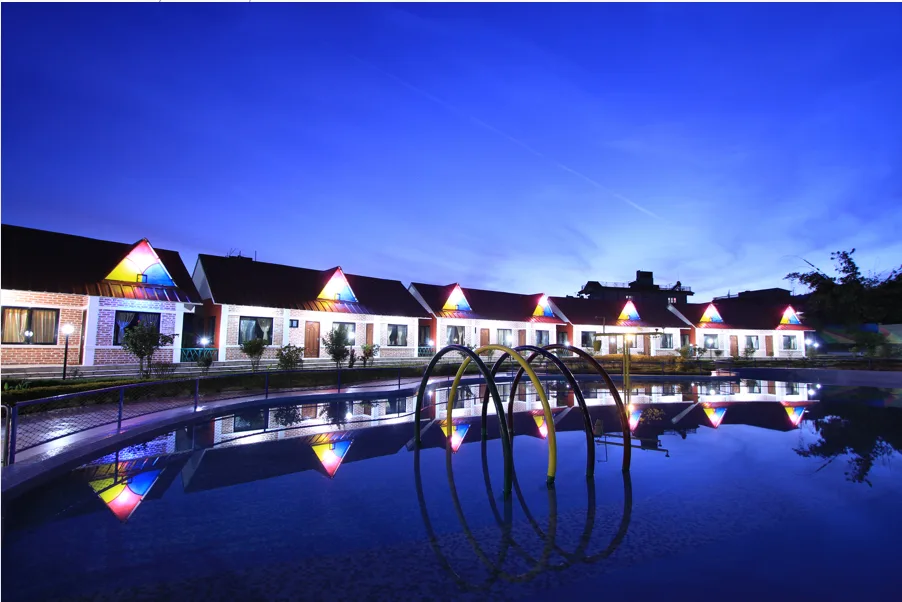
A photograph of a pool can introduce the atmosphere of a hotel. A prospective guest still needs to know which room they are considering, what is included and whether the stay suits their plans.
For a luxury hotel, the details behind the promise deserve the same attention as the image. Quiet, privacy and personal service mean different things to different guests. Explain the arrangements that support those words instead of asking the photograph to do every job.
Begin with the place itself
When we worked with Hotel Jal Mahal, a family-run resort in Pokhara, we visited and spoke with the family. Their children played in the gardens as they showed us around. That sense of a family home informed the brand and website.
The design took a shade of blue from the sky reflected in the infinity pool, with black and white beside it. The mark referred to the water and the garden.
The lesson for a hotel considering its website is to identify what belongs to its own place. A collection of familiar luxury adjectives gives a designer less to work with than the experience the hotel actually offers.
Make rooms possible to compare
A guest choosing a room needs to connect the photograph to the room being sold. Give each room type its own accurate description and show the features that distinguish it. A view, layout or access arrangement should not be implied by a photograph from a different category.
An illustrative example is a couple comparing a garden room with a suite. They may care about outdoor space, privacy and distance from shared areas as much as floor area. The website should help them identify the relevant differences.
The same principle applies to dining, transfers and activities. State what the booking includes and what needs a separate arrangement. Clarity is part of the experience before arrival.
Let the guest understand the next step
When a visitor selects dates, the transition to the booking service should retain the hotel’s identity and the room they were considering where the system supports it. If the hotel confirms availability by enquiry, say what the guest is requesting.
Explain the applicable payment and cancellation terms before a commitment. These depend on the actual rate and booking arrangement; generic assurances should not replace them. If a guest needs help with access or a particular requirement, provide a clear way to ask.
These are decisions for the hotel and its booking provider to settle together. A beautiful page cannot supply a missing policy.
Keep the experience current
The website continues to make promises after launch. Seasonal offers, room photographs and service descriptions need an owner who knows when they change. An expired promotion or an unavailable experience creates uncertainty that more imagery will not resolve.
Choose a design your team can keep accurate. Let photographs establish the setting and let the content answer the decisions around the stay. The guest should reach the booking conversation with a clear understanding of what the hotel is offering.
Does your hotel’s website feel like a stay there? Send us the link.
A few lines are enough. We reply with our first questions within an hour, Monday to Friday, 9am to 6pm Nepal time.
Tell us about your businessRelated work: Hotel Jal Mahal. More from the blog: What social media should do for a travel business, Why branding matters for a travel business. Or all posts.